

The Most Efficient and Safe Banks Mowing
Tackle Steep Slopes, Brush, and Vines with SPIDER
Maintaining steep slopes, pond banks, lake edges, and stormwater retention areas is one of the most challenging and hazardous tasks in landscape management.
Traditional methods using manned machines on dangerous terrain put operators at serious risk. SPIDER Remote‑Controlled Mowers deliver a safer way forward—combining maximum operator safety, superior efficiency, and cutting‑edge slope‑mowing technology designed specifically for shoreline and bank work.

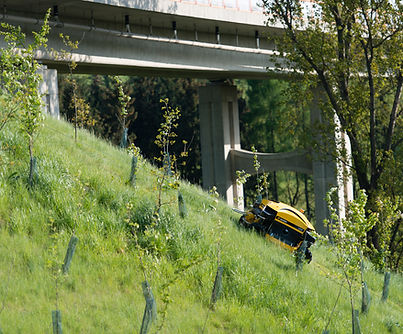
Keeping crews off the slope, maintaining clear inspection sightlines.

Remote-controlled slope mowing changes the game.
When you add woody brush and volunteer saplings, invasive vines, thick seasonal growth, and wet or unstable soils, conventional mowers and tractors quickly become slow, risky, and costly. That’s where remote‑controlled slope mowing changes the game—keeping crews off the slope, maintaining clear inspection sightlines for stormwater assets, and delivering a clean, consistent cut on steep, saturated banks where other machines struggle.
%201_edited.jpg)


Why Shoreline & Bank Mowing Is So Challenging
And Why Standard Equipment Often Falls Short

Wet edges and soft soils can destroy traction and the jobsite
Even when the top of a bank looks dry, moisture can sit below the surface near the waterline.
This can lead to:
-
Wheel slip and turf damage
-
Ruts that accelerate erosion
-
Getting equipment stuck and needing recovery

Access limitations increase labor costs
A lot of shoreline mowing is hard-to-access mowing:
-
Narrow tops of pond dams
-
Restricted access in subdivisions or parks
-
Limited turning radius along levees
-
No safe way to put an operator directly on the slope
That often pushes crews toward labor-heavy options like trimmers and brush cutters—or slow, risky approaches with machines that weren’t designed for steep work.
Steep slopes + uneven ground
= high risk and low speed
Banks and embankments are rarely uniform.
You’ll encounter:
-
Sudden grade changes
-
Rutting and washouts
-
Rocks, debris, and hidden obstacles
-
Narrow access routes along dams and berms
On steep terrain, conventional ride-on mowers and tractors often require slower passes and wider safety margins - reducing productivity.

Vegetation isn’t “just grass” on banks
Many shoreline sites deal with aggressive growth cycles and mixed vegetation such as:
-
Volunteer saplings (unwanted woody growth)
-
Brush and thick weeds
-
Climbing vines and ground-covering vines
-
Dense seasonal growth after rain events
If you’re maintaining stormwater basins, ditches, or riverbanks, you know the pattern: miss a window and the next pass becomes a heavy-duty clearing job.

The Modern Solution:
Remote-Controlled Slope Mowing Near Water
When slopes get steep and access gets tight, remote-controlled slope mowers help solve two of the biggest issues at once:
Operator safety: the operator can remain at a safer position rather than standing on the slope.
Productivity: designed for steep terrain, these machines maintain stability and consistent cutting—especially on embankments and banks.
Safe Maintenance of Steep Banks Using Remote‑Controlled SPIDER Mowers
A remote controlled slope mower keeps the operator off the hazard zone, reducing exposure to roll over risks, hidden ruts, flying debris, and heat stress common with ride on equipment and manual brush cutting. With a control range up to 900 feet, crews can mow steep hillsides, deep brush, and uneven banks from a safe position. SPIDER adds further protection with a hydraulic stabilizing winch that keeps all four wheels planted on extreme slopes, while safety features such as an emergency stop (shuts down engine and blades within seconds) and automatic wheel lock on power loss help prevent runaways on inclines; as a best practice, SPIDER recommends line of sight operation, typically within ~165 feet.
Which Model Fits Your Work?
.png)
EXTREME SLOPES
For heavy-duty mowing in hot climates and tall, wild grass.
Cutting Width: 48.5 in
COMPACT POWER
Versatile proven performer for steep slopes and rough conditions.
Cutting Width: 31.5 in
Your Quick Selection Guide
Choose SPIDER 2SGS EFI if you regularly deal with:
-
Thick brush, volunteer saplings, dense vines
-
Steep, uneven slopes as your primary workload
-
Heavy-duty vegetation management requirements
Choose SPIDER ILD01 if your typical work is:
-
Regular mowing on banks/embankments with manageable growth
-
Maintenance schedules that prevent severe overgrowth
-
A need for a highly productive slope mower without maximum-duty demands


